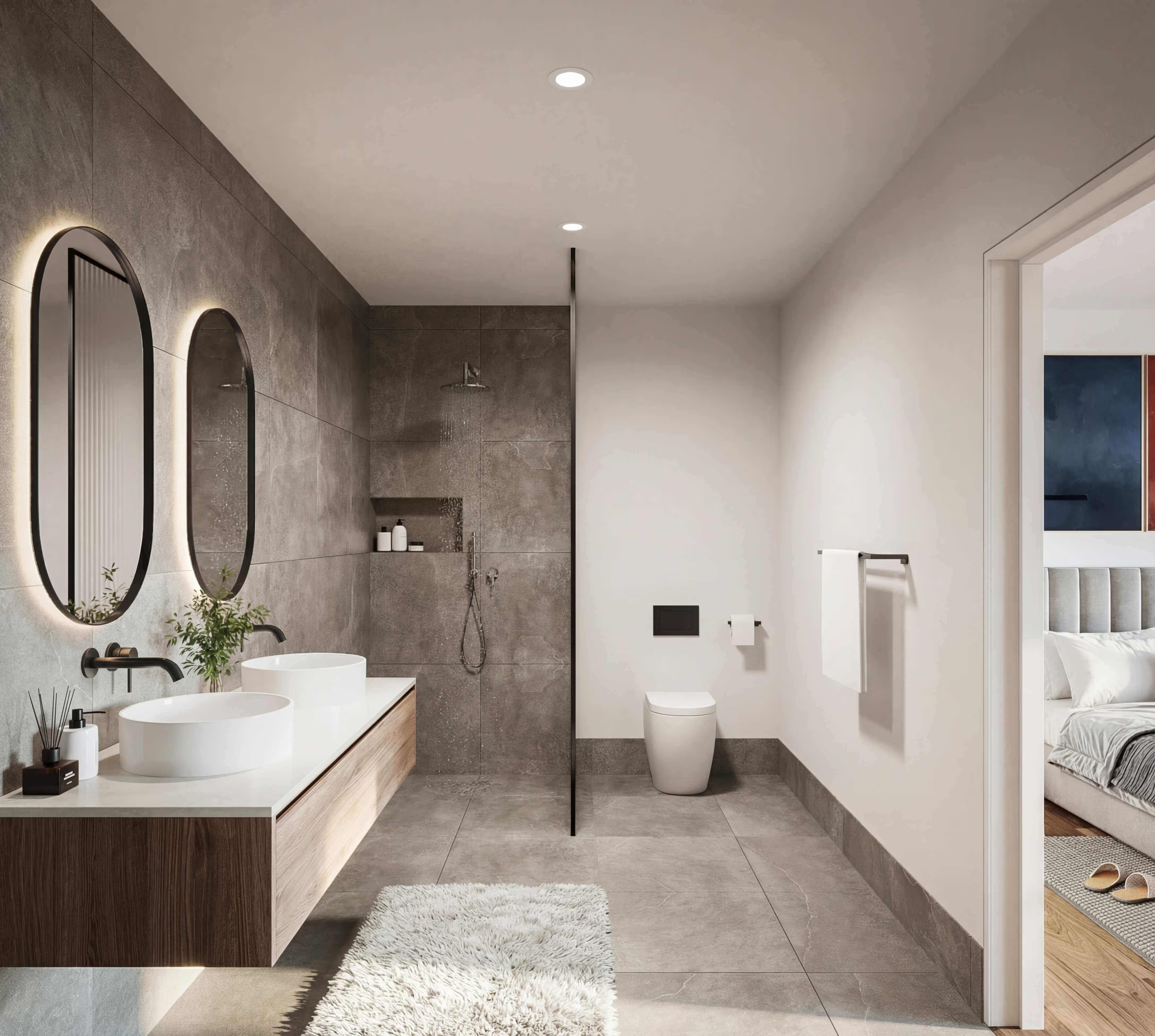
Empty rooms do not sell. They confuse buyers, depress perceived value, and make it nearly impossible to stand out on crowded property portals. Virtual staging - the process of digitally furnishing empty rooms in photographs - has emerged as one of the most cost-effective solutions in real estate marketing. But how much does it actually cost, and how does it compare to traditional home staging? In this guide, we break down the costs, methods, and results of digital staging in the DACH market.
Quick numbers: Professional virtual staging costs EUR 50-300 per image in the DACH market. Traditional physical staging costs EUR 2,000-8,000 per property for 3-6 months. Virtual staging delivers comparable buyer engagement at 5-10% of the cost.

What Is Virtual Staging?
Virtual staging takes a photograph of an empty or poorly furnished room and digitally adds furniture, decor, lighting effects, and sometimes even material changes like new flooring or wall paint. The result is a realistic image that shows buyers what the space could look like when furnished to its full potential.
Unlike full 3D rendering - which creates an entirely computer-generated image from scratch - virtual staging starts with a real photograph and layers digital elements on top. This makes it faster, cheaper, and particularly effective for existing properties that are empty or undergoing renovation. For a complete comparison of these approaches, see our guide on rendering vs. photography.
TwoBuild's virtual staging service combines photographic authenticity with professional interior design, creating images that feel both real and aspirational - exactly what drives buyer engagement in the DACH market.
See the Difference: Before and After
The impact of virtual staging is best understood visually. Move the slider below to see how an empty room transforms with professional digital furnishing.
Virtual Staging Costs: A Detailed Breakdown
The pricing landscape for virtual staging in Austria, Germany, and Switzerland ranges from budget automated solutions to premium professional services. Understanding the tiers helps you choose the right level for your project.
Budget Tier: EUR 20-80 per image
Automated and semi-automated platforms offer basic virtual staging using AI-generated furniture placement. While fast (often delivered within hours), the results can look artificial - furniture may float above floors, shadows may be inconsistent, and furniture styles may not match the property's character. For low-value listings or quick internal assessments, this tier can work. For professional marketing, it typically falls short.
Professional Tier: EUR 80-200 per image
Professional virtual staging studios manually place 3D-rendered furniture into photographs, carefully matching perspective, lighting, and shadows. The results are significantly more realistic than automated alternatives. This is the sweet spot for most real estate agents and developers - delivering excellent quality at a reasonable price point. Most professional studios include 1-2 revision rounds in their pricing.
Premium Tier: EUR 200-300+ per image
Premium virtual staging goes beyond furniture placement to include material changes (new flooring, wall treatments, kitchen refurbishments), advanced lighting effects, and custom furniture selections matched to target buyer demographics. For luxury properties and high-end developments, this investment level ensures the staging reflects the property's positioning.
Volume pricing: Most professional virtual staging providers offer significant discounts for bulk orders. Staging 10-20 images for a development project can reduce per-image costs by 20-40%. Ask for package pricing when ordering multiple rooms or properties.

Virtual Staging vs. Traditional Home Staging: The Numbers
Traditional home staging - physically furnishing a property with rented furniture - remains popular in the DACH market, especially for show apartments in new developments. But the cost difference is substantial.
Traditional staging costs: A typical staging package for a 70-80 sqm apartment in Austria costs EUR 2,000-5,000 for the initial setup plus EUR 400-1,000 per month in ongoing rental fees. For a 6-month marketing period, total costs reach EUR 4,500-11,000 per apartment. For larger properties or luxury segments, costs can exceed EUR 15,000.
Virtual staging costs: Staging 5-8 rooms of the same apartment digitally costs EUR 400-1,600 total, with no ongoing rental fees, no logistics, no wear and tear, and no furniture return costs. The images can be used indefinitely.
The math is clear: virtual staging delivers comparable marketing impact at 5-15% of the cost of traditional staging. This does not mean traditional staging is obsolete - for a show apartment that buyers physically visit, the tactile experience of real furniture remains valuable. But for online marketing, portal listings, and brochures, virtual staging is dramatically more cost-effective.
"We used to physically stage two show apartments per development at a cost of EUR 8,000-12,000 each. Now we physically stage one flagship unit and virtually stage the rest. Our marketing effectiveness has not decreased, but our staging budget dropped by 60%."
When to Use Virtual Staging
Virtual staging is most effective in these specific scenarios that real estate professionals across the DACH market encounter regularly.
Empty apartments for sale or rent. The most common use case. An empty room photographs as cold and uninviting. Virtual staging adds warmth, scale reference, and lifestyle aspiration. Listings with virtually staged images receive 30-50% more engagement on portals like willhaben.at and ImmoScout24.
Renovation projects. Properties being sold as renovation candidates benefit from virtual staging that shows the potential - new kitchen, modern bathroom, updated living spaces - without the need to actually complete the renovation. This helps buyers visualize what their investment will achieve.
Multiple configuration options. Virtual staging allows you to show the same room in different furniture styles - targeting different buyer demographics with the same listing. Show a modern minimalist version for young professionals and a family-oriented version for buyers with children.
Complementing new development marketing. For projects where full interior renderings are used for the flagship apartment types, virtual staging can cost-effectively cover secondary unit types and alternative configurations.
Quality Indicators: How to Spot Good Virtual Staging
Not all virtual staging is equal. Here is how to evaluate quality before committing to a provider.
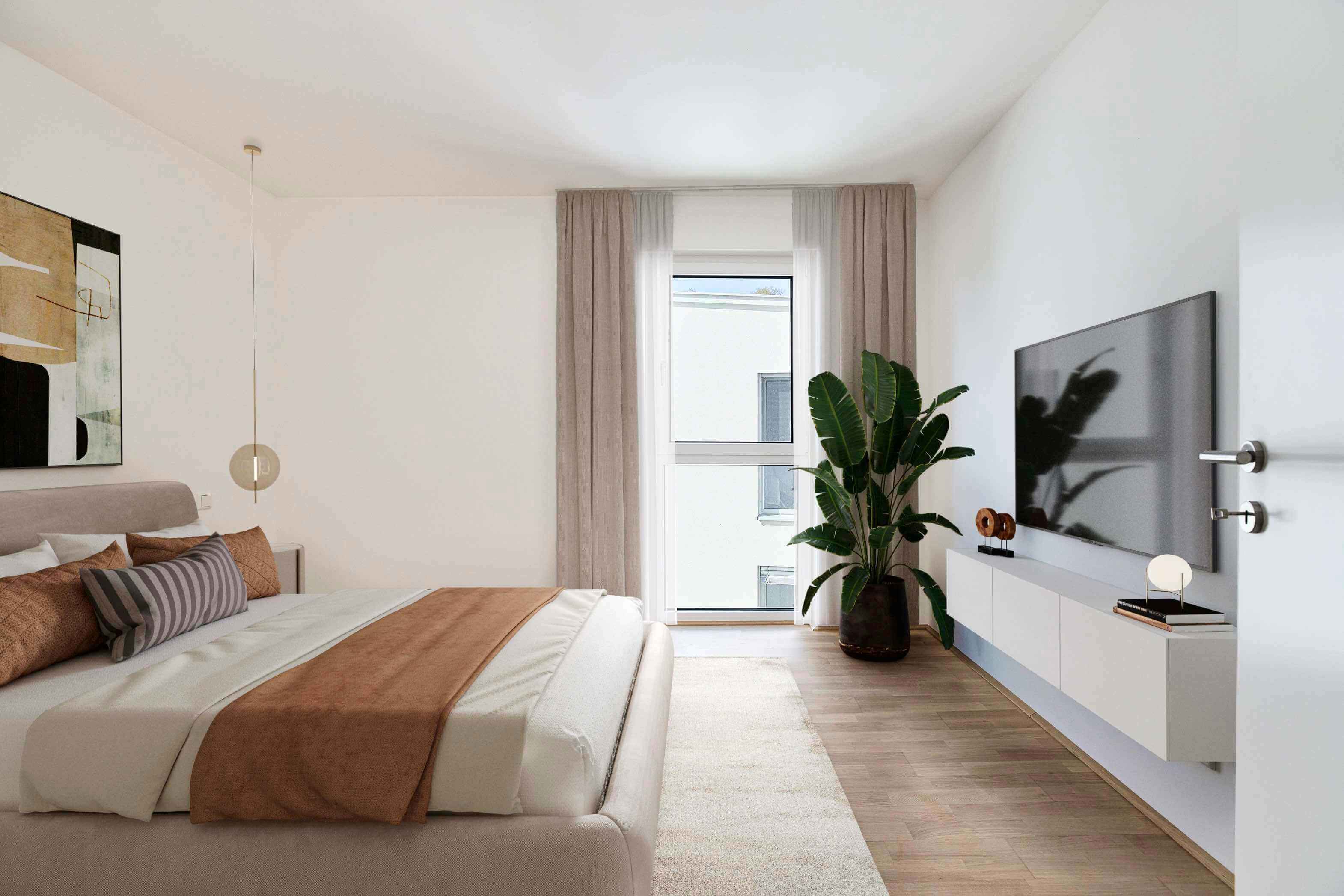
Shadow consistency. In high-quality staging, furniture shadows match the room's existing light direction. Poor staging shows furniture with no shadows or shadows that contradict the room's natural light - an immediate red flag that the image is digitally altered.
Perspective accuracy. Furniture must respect the photograph's perspective lines. If a sofa appears to tilt at an angle inconsistent with the floor, or if a table seems to hover above the ground, the staging quality is insufficient for professional use.
Material realism. Good virtual staging uses furniture textures that respond to the room's lighting conditions. Fabric should look like fabric, wood should show grain, and metal should reflect appropriately. Flat, matte furniture textures that do not interact with room light look obviously digital.
Style appropriateness. The furniture selection should match the property's market position and target audience. Placing ultra-modern furniture in a traditional Viennese Altbau creates a visual disconnect. The best providers adapt their staging to the property's character and target market.
Legal Considerations in the DACH Market
An important aspect of virtual staging that is sometimes overlooked: legal and ethical considerations around buyer expectations.
In Austria and Germany, marketing materials must not mislead buyers about the actual state of a property. When using virtual staging, best practice is to clearly label staged images as "Einrichtungsvorschlag" (furnishing suggestion) or "Virtually staged" - both in the listing and on the image itself. Most professional staging providers include subtle watermarks or disclaimers for this purpose.
This transparency actually builds trust. Buyers appreciate seeing the potential of a space while understanding that the furniture is illustrative. The combination of unstaged and staged images in a listing gives buyers both the factual reality and the aspirational vision.
"We always include both the original empty room photo and the virtually staged version in our listings. Buyers tell us they appreciate the honesty, and the staged images help them understand the space better. It has never been a negative - only positive."
For property developers and agents looking to maximize the impact of their listings while keeping costs under control, virtual staging represents one of the best value investments in the entire marketing toolkit. Combined with professional exterior renderings and 3D floor plans, it creates a comprehensive visual package that sells properties faster and at better prices.
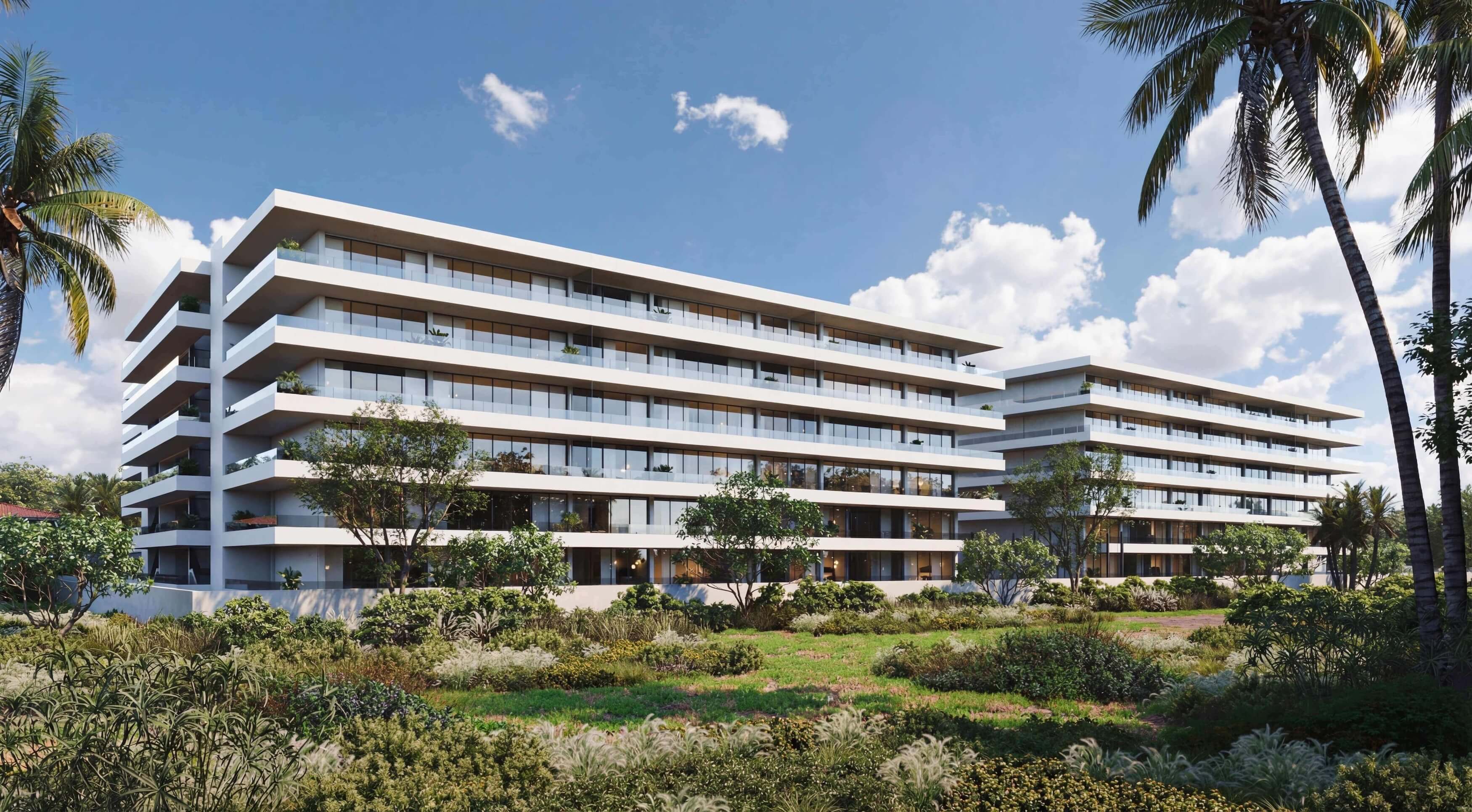

Sell Faster. Impress More. Close Deals with Stunning Architectural Renderings.
Join top real estate professionals and developers using high-end visualizations to attract buyers and close deals with confidence.