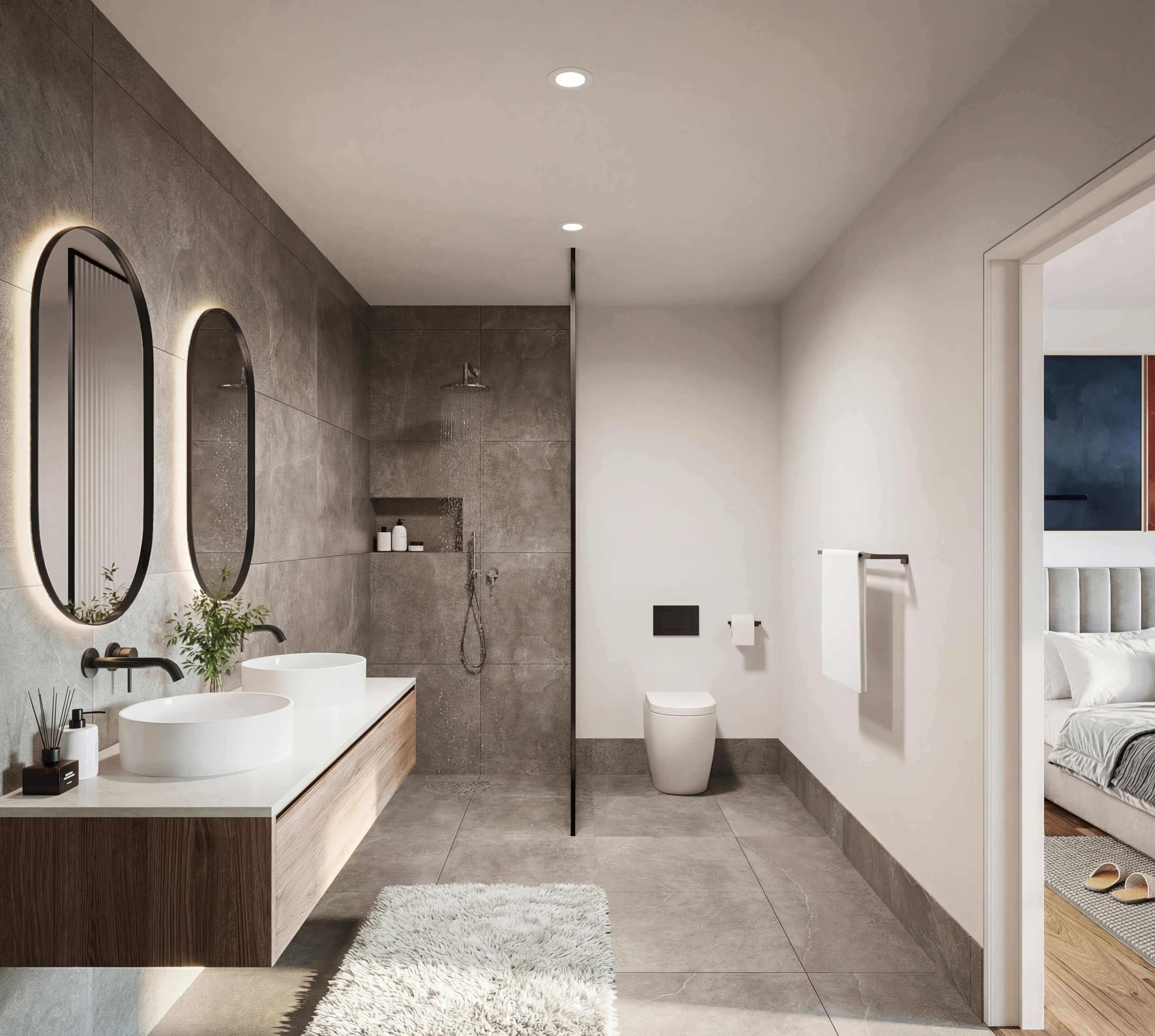
Imagine being able to walk through a property from your sofa in Vienna, explore every room of a holiday apartment in Tyrol, or inspect the lobby of a hotel that has not been built yet - all from a web browser or VR headset. That is the promise of 360-degree virtual tours, and property developers, hotels, and real estate agents across the DACH market are rapidly adopting them. But what do they cost, who provides them, and what benefits can you realistically expect? Here is the complete guide.
Quick overview: A 360-degree virtual tour for a standard apartment (5-8 viewpoints) costs EUR 500-2,500 in the DACH market. Photography-based tours (Matterport) for existing properties start at EUR 300-800. CGI-based virtual tours for unbuilt projects range from EUR 800-3,000.
Types of 360-Degree Virtual Tours
Not all virtual tours are created equal. The DACH market offers several distinct types, each with different production methods, quality levels, and price points.
Photography-Based Tours (Matterport and Similar)
These tours use specialized 360-degree cameras (most commonly Matterport) to capture real spaces. A photographer visits the property, captures scans from multiple positions, and the software stitches these into a navigable 3D experience. The result is an authentic representation of the actual space - what exists today.
Matterport tours are the standard for existing properties in the DACH market. They are widely used by real estate agents on willhaben.at, immowelt.de, and ImmoScout24. Average costs in Austria range from EUR 300-800 for a standard apartment, depending on size and the number of scan positions. Larger properties (villas, commercial spaces, hotels) can cost EUR 800-2,000.
CGI-Based Virtual Tours
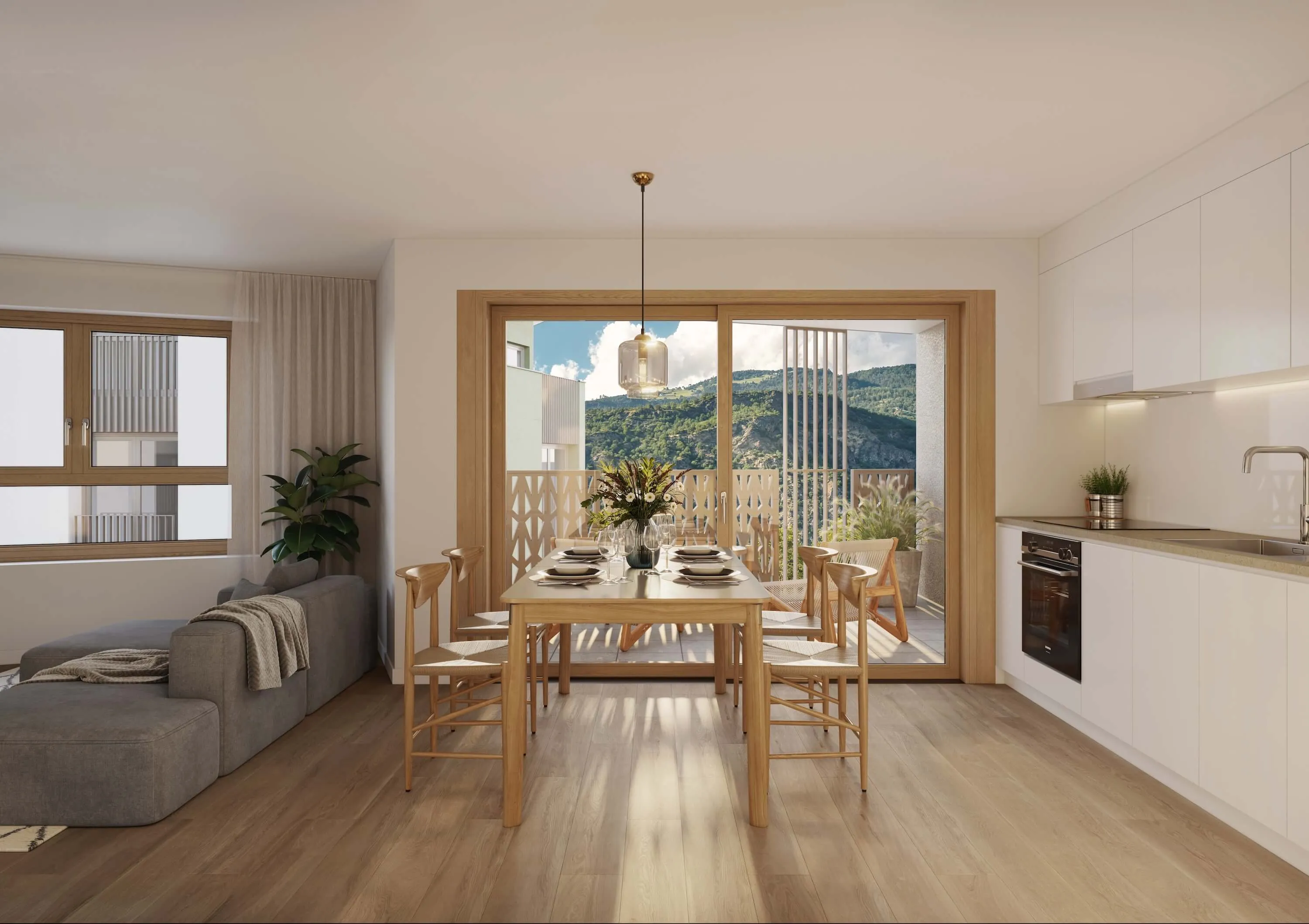
For properties that do not yet exist - new developments, planned renovations, hotel projects in the design phase - CGI virtual tours are created entirely from 3D models. These tours offer the same interactive exploration experience but are based on architectural plans rather than physical spaces.
CGI-based 360-degree tours are particularly valuable for Bauträger selling off-plan. They allow buyers to explore a future apartment as if it were already built and furnished - a powerful sales tool that static renderings alone cannot replicate. Prices range from EUR 800-3,000 per tour, depending on the number of viewpoints and level of interior detail.
Hybrid Tours
Some projects benefit from combining photography-based and CGI-based approaches. For a renovation project, for example, you might show the current state via Matterport scan and the planned future state via CGI tour - giving buyers both reality and vision. This approach is growing in popularity among Austrian developers working on urban renovation projects.
Try it yourself: Explore this interactive Matterport 360° virtual tour to see exactly what your clients will experience.
What Does a 360-Degree Tour Cost?
Here is a detailed cost breakdown for the DACH market in 2026.
Photography-Based Tours (Existing Properties)
Small apartment (up to 80 sqm): EUR 300-600. Typically 5-8 scan positions covering all rooms. Delivered within 2-5 business days after the on-site shoot. This includes hosting on the platform (Matterport, etc.) for a period typically ranging from 6-12 months, after which annual hosting fees of EUR 50-200 apply.
Medium property (80-200 sqm): EUR 500-1,200. More scan positions are needed for proper coverage, and the shoot takes longer on-site. Delivery timeline is similar.
Large property or commercial space (200+ sqm): EUR 800-2,500. Hotels, office buildings, and large villas may require 20-40 scan positions. Some providers charge per scan position (EUR 20-50 per position) rather than a flat rate for larger properties.
CGI-Based Tours (Unbuilt Properties)
Single room/apartment tour (3-5 viewpoints): EUR 800-1,500. This covers a typical apartment walkthrough with viewpoints in the living area, kitchen, bedroom, bathroom, and entrance. Each viewpoint is a full 360-degree panorama rendered from the 3D model.
Comprehensive tour (6-10 viewpoints): EUR 1,500-3,000. For larger apartments or those with unique features (terraces, special rooms), more viewpoints provide a richer exploration experience.
Development-wide tours: When creating tours for multiple apartment types in a development, costs decrease per tour because studios can reuse common elements (building structure, shared spaces). A package of 3-5 different apartment tours for a development project might cost EUR 3,000-8,000 total.
Bundle savings: If you are already commissioning interior renderings, adding a 360-degree tour to the package often costs only 30-50% of the standalone tour price. The 3D scene is already built - the studio just needs to render additional panoramic viewpoints.
Choosing a Provider: What to Look For
The virtual tour market in the DACH region includes specialized tour providers, general real estate photographers with 360 capabilities, and full-service visualization studios. Each has different strengths.
Specialized tour companies (Matterport partners, dedicated 360 providers) offer efficient, standardized services at competitive prices. They are the best choice for high-volume photography-based tours - for example, a real estate agency that needs tours for every listing.
Visualization studios like TwoBuild excel at CGI-based tours and integrated packages. When your tour needs to match the visual language of your exterior renderings and 3D floor plans, a full-service studio ensures consistency. They are also the only option for creating tours of unbuilt properties.
When evaluating providers, consider tour quality and navigation smoothness, hosting reliability and loading speed, integration capabilities with your website and portal listings, mobile and VR compatibility, and support for branding and custom features.
"We switched from a generic Matterport provider to a visualization studio for our off-plan tours. The quality difference was dramatic - the CGI tours matched our brochure renderings perfectly, creating a seamless brand experience. Buyers commented that exploring the virtual tour felt like walking through the actual apartment."
Benefits: Why Virtual Tours Work
The data supporting virtual tours in real estate marketing is strong and growing.
Increased engagement. Properties with virtual tours on Austrian and German portals receive 40-80% more time-on-listing compared to standard photo galleries. This extended engagement correlates with higher inquiry rates and more qualified leads.
Pre-qualification of buyers. Virtual tours allow buyers to thoroughly explore a property before scheduling an in-person viewing. This pre-qualification effect reduces the number of unproductive viewings - saving agents and developers significant time. Several Austrian agencies report that viewings per sale dropped by 30-50% after implementing virtual tours, because buyers already knew the property matched their needs before visiting.
Remote buyers. In a market where Austrian properties are increasingly purchased by buyers from Germany, Switzerland, and beyond, virtual tours enable confident purchase decisions without physical visits. This is especially relevant for holiday properties in Tyrol and Salzburg, investment apartments in Vienna, and cross-border purchases from South Tyrol.
24/7 open house. Unlike physical viewings that require scheduling, a virtual tour is always available. International buyers in different time zones, busy professionals who cannot visit during business hours, and cautious buyers who prefer to research extensively before making contact can all explore at their convenience.
Virtual Tours for Hotels and Tourism
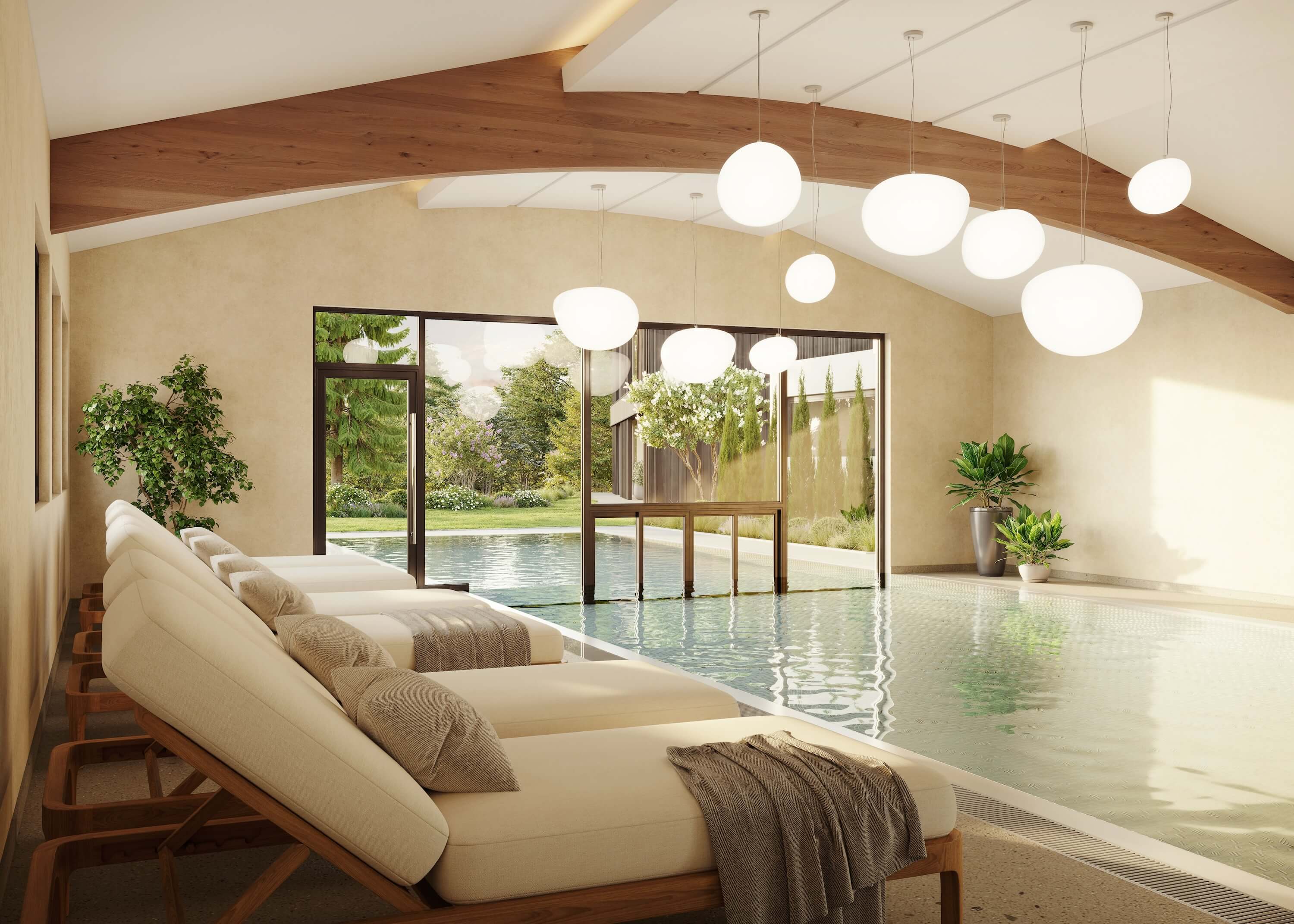
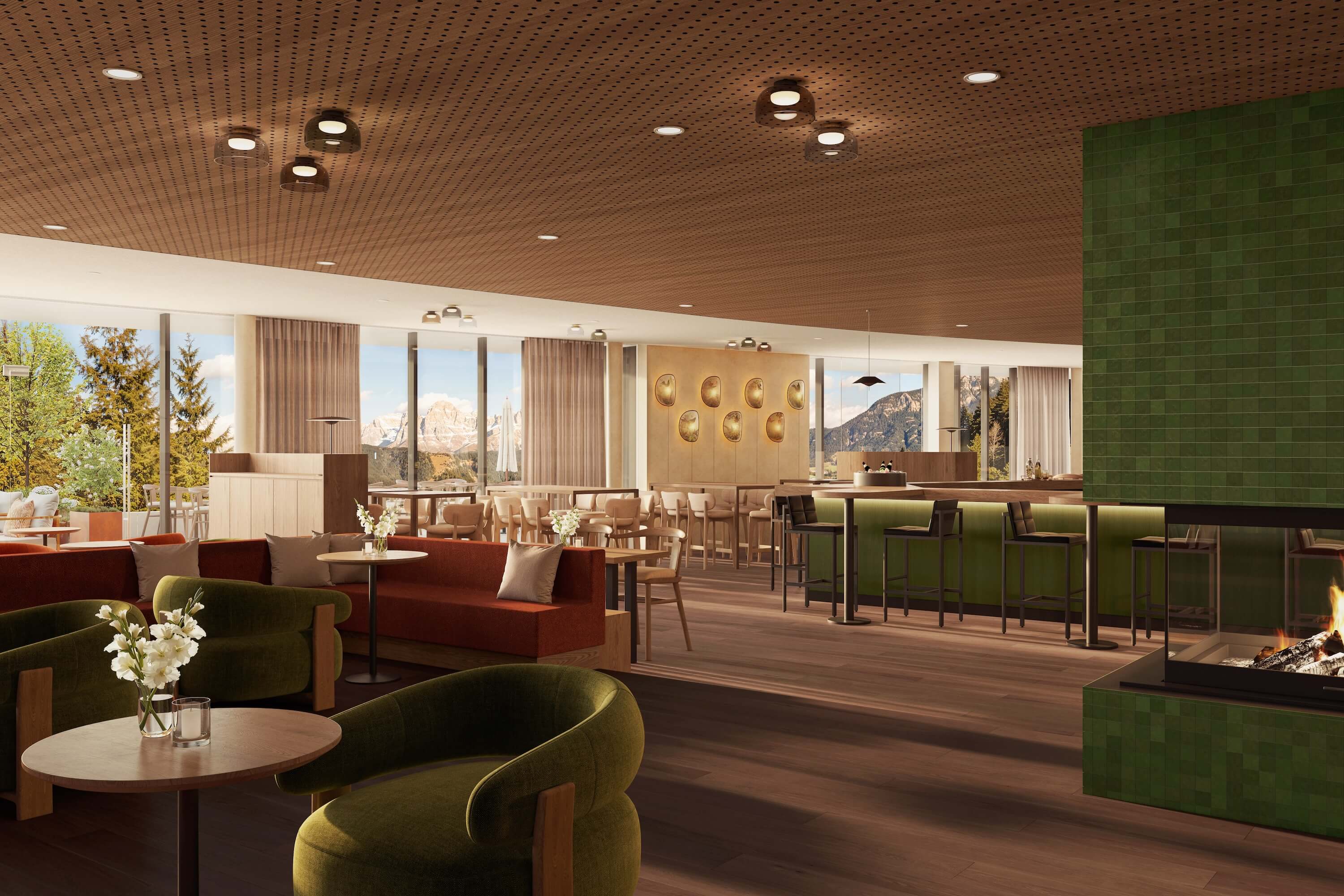
Beyond residential real estate, 360-degree tours have found a particularly strong application in the DACH hospitality sector. Hotels, resorts, and tourism properties use virtual tours to showcase rooms, common areas, spa facilities, conference spaces, and outdoor environments.
For hotel developers planning new properties or renovations, CGI-based virtual tours serve a dual purpose: marketing to future guests and securing investor confidence. A virtual tour of a planned boutique hotel in the Austrian Alps, for example, can be used in investor presentations to demonstrate the guest experience months before construction begins.
Established hotels use photography-based tours as a powerful booking conversion tool. Studies indicate that hotel listings with virtual tours achieve 15-30% higher booking conversion rates compared to listings with only standard photography. When guests can explore a room type before booking, their confidence in the purchase increases significantly.
Technical Considerations
A few technical aspects to consider when planning your virtual tour project.
Hosting and loading speed. Virtual tours are data-intensive. Choose a provider whose hosting infrastructure delivers fast loading times, especially on mobile devices. A tour that takes 10 seconds to load on a smartphone loses most visitors.
Website integration. Ensure your tour can be embedded on your project website without technical complications. Most modern tour platforms offer iframe embed codes that work with standard web builders. Some platforms also offer direct integrations with major Austrian and German property portals.
Mobile optimization. Over 60% of property portal traffic in the DACH market comes from mobile devices. Your tour must work smoothly on smartphones and tablets - both in terms of navigation and loading performance.
VR compatibility. While VR headset usage remains niche in the consumer market, it is growing rapidly for sales office presentations. If you plan to use tours in a physical sales environment, ensure VR compatibility with devices like Meta Quest.
Whether you are a Bauträger marketing your next development, a Makler looking to upgrade your listings, or a hotel developer seeking investor commitment, 360-degree virtual tours offer a proven way to increase engagement, qualify buyers, and accelerate sales. The technology is mature, the costs are reasonable, and the competitive advantage is clear. For help choosing the right approach for your project, explore our studio selection checklist or read about the typical visualization timeline.

Sell Faster. Impress More. Close Deals with Stunning Architectural Renderings.
Join top real estate professionals and developers using high-end visualizations to attract buyers and close deals with confidence.